Do's and Don't's for Helping Someone With an Eating Disorder
The following image is provided by the National Association of Anorexia Nervosa and Associated Disorders (ANAD), the oldest organization created to provide information and resources for those suffering from anorexia.
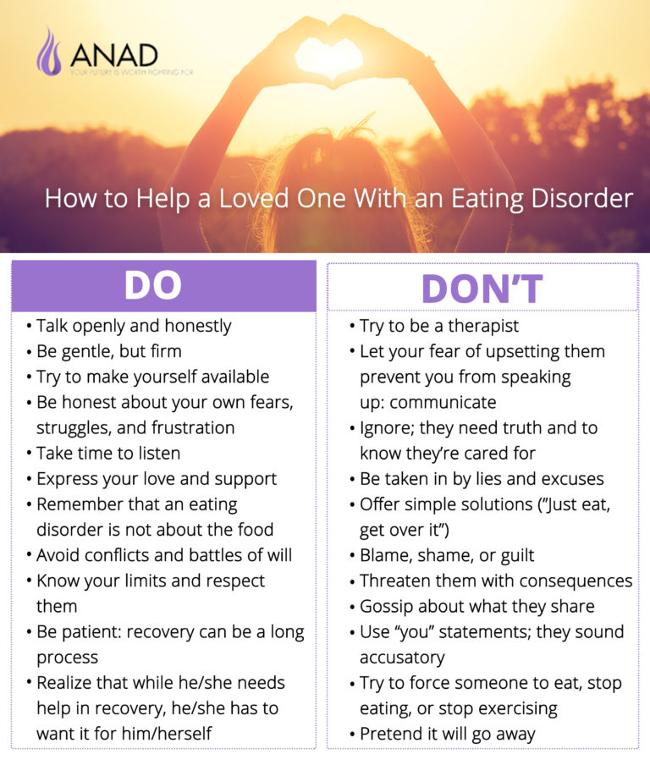
When I was recovering, my progress was often impeded by comments people made, either directly to me or just general remarks about dieting or exercising. Since my anorexia was largely fueled by others complimenting my weight loss or will power, I was very sensitive to feeling like anyone was negatively judging what, or how much, I was eating. Additionally, it was very triggering to hear people talk about how little they ate or how much they exercised.
My Advice For Supporting Someone Through Anorexia Recovery:
Things to say:
- I'm here for you.
- Let me know how I can help you.
- I know it's really hard, but I'm so proud of you.
Things to NOT say:
- Why can't you just eat more?
- You wouldn't be anorexic if you had [some delicious food].
- Are you sure you need to eat all that?
- Aren't you recovered yet?
- I'm so glad you've gained some weight!
Try not to mention specific numbers, whether it's caloric information or body weight. Additionally, avoid talking about your own body image or eating/exercise habits around people trying to recover. Acknowledge how difficult recovering from an eating disorder is and praise the progress they've made, even if they are struggling.
The most important thing to do is to listen to the person. To some people, hearing "You look so much healthier now!" could be really motivating, but to other people, it could feel like a reminder that they've gained weight. Everyone with anorexia is different, so there's no one way to help, but asking the person how you can help and being receptive to their feedback is a great first step. You may have thought that something you said or did would have been very helpful, but it could actually be triggering to them. If the person feels comfortable enough to tell you that something you did was not helpful, please listen to them and work to change your behavior.